WHAT TO EXPECT
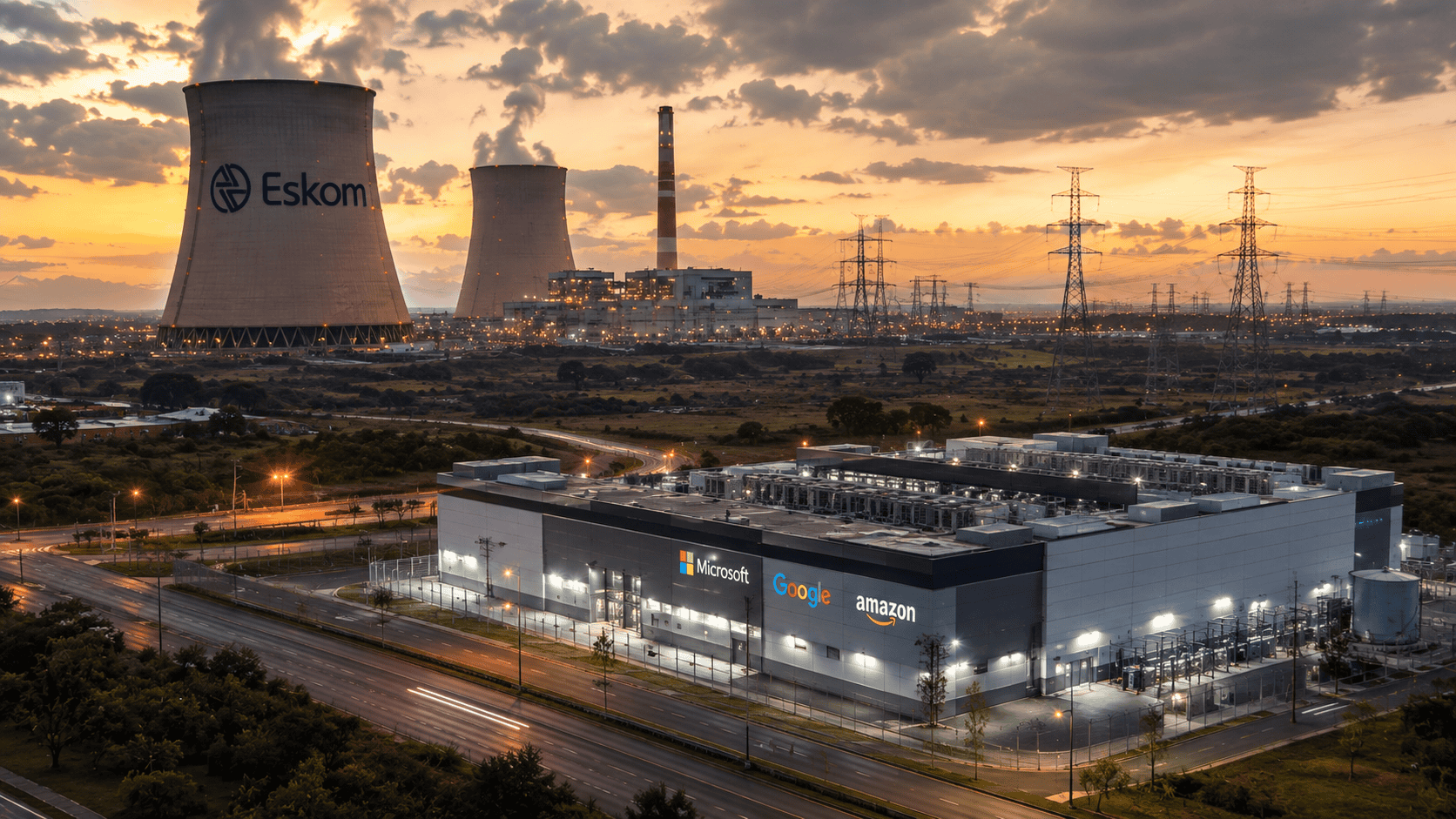
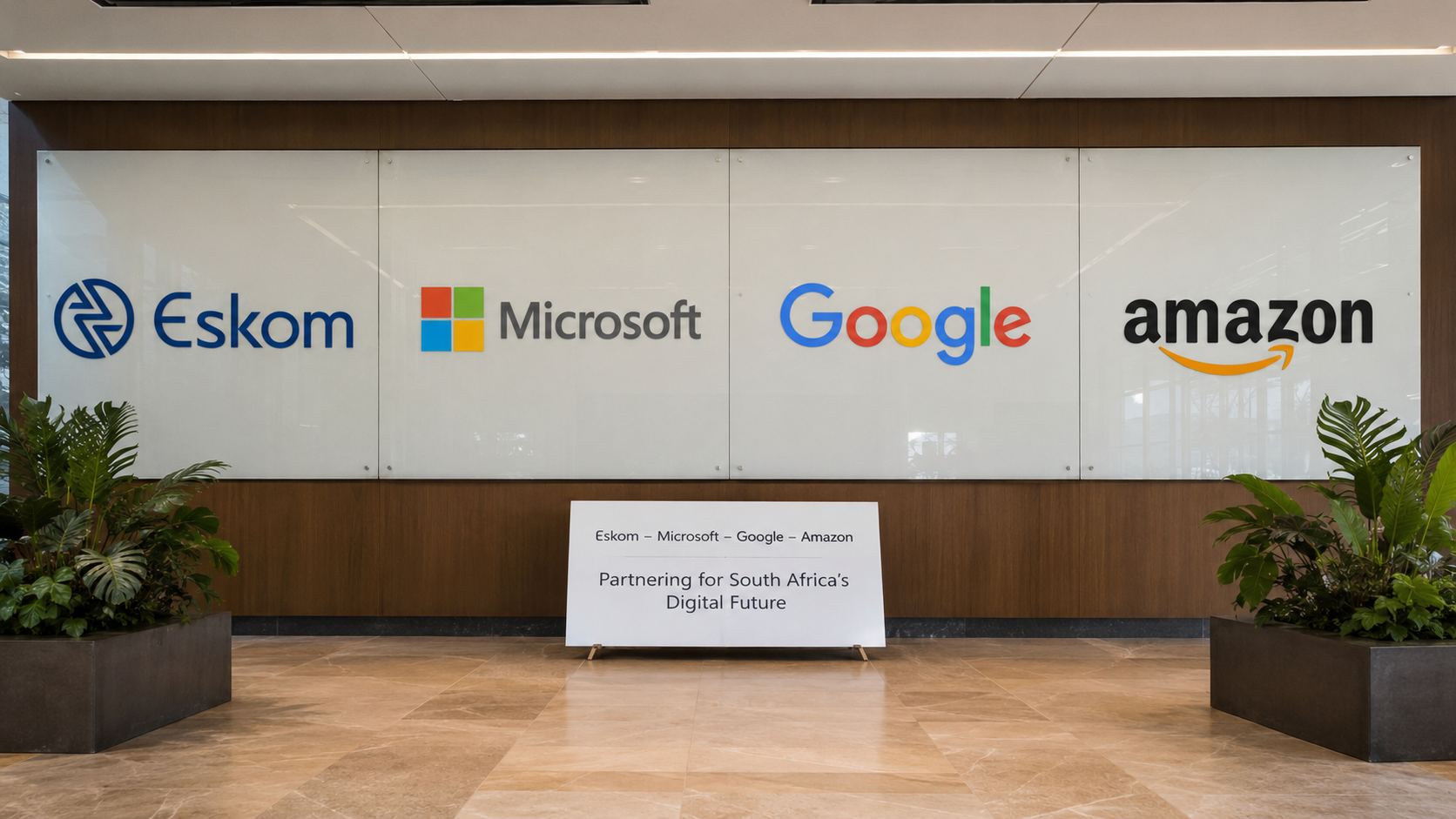
Eskom is talking to Amazon, Microsoft and Google about selling them electricity. The idea is to power the data centres these companies use to run things like cloud storage and AI. Providing power to these Eskom data centres clients is a new priority.
Eskom’s chairperson, Mteto Nyati confirmed the talks in an interview with the Financial Times, published on 12 August 2026, about having discussions with Amazon, Microsoft & Google.
Nothing has been signed or confirmed yet. As of 18 August, there’s no confirmed deal – just ongoing talks.
Why does Eskom suddenly have extra power to sell? Why?
For the past years, South Africa had power cuts almost every single day aka load-shedding. That’s now over. The country hasn’t had load-shedding for more than a year.
Eskom fixed a lot of problems with its power plants, so fewer breakdowns happen. This means more electricity is available than before. Right now, Eskom has about 6 gigawatts (GW) of extra power at peak times – the most spare capacity it’s had in almost 10 years.
In simple terms: Eskom is now making more electricity than the country is using.
Eskom data centres: Why the sudden push?
Data centres are large facilities packed with computer servers. They use huge amounts of electricity, especially in these times of AI. So they’re an obvious customer for Eskom with spare or leftover electricity to sell.
South Africa already has about 70% of all the data centre capacity on the entire African continent. That’s huge numbers. The data/AI industry is expected double in size by 2031.
Not everyone agrees this will work
Here’s the catch. South Africa’s biggest data centre company, Teraco, says power supply isn’t actually the industry’s main problem.
According to Teraco, what data centres really struggle with is getting connected to the power grid, and getting access to renewable energy like solar and wind – not a shortage of electricity to buy.
This matters because big tech companies like Amazon, Google and Microsoft usually want to run on renewable energy, not power made mostly from burning coal, which is how most of Eskom’s electricity is produced. So even if Eskom has plenty of power, these companies might not want that specific kind of power.
Some data centre operators are already building their own renewable power sources instead. Teraco, for example, is building its own 120 megawatt solar plant and has a separate deal to buy wind power.
Eskom still has money problems
Even with extra power to sell, Eskom is far from financially healthy.
- Eskom owes about R359 billion in debt, even after the government gave it a R254 billion bailout.
- Municipalities across the country owe Eskom around R118 billion in unpaid electricity bills.
Selling power to data centres could bring in useful extra income, but it won’t fix these bigger financial problems on its own.
What to watch next
Right now, this is just talk – no contracts have been signed. What happens next depends on things like:
- Whether Eskom can offer competitive prices
- Whether these companies are willing to use coal-based power, even partly
- Whether Eskom can actually connect data centres to the grid where they need it
We’ll update this article if any of the three companies confirm a deal, or if Eskom shares more details.
Sources
- Financial Times – “South Africa’s Eskom targets data centre ‘gold rush’ for its power surplus” – Read more
- TechCentral – “Why the AI gold rush may be smaller than Eskom hopes” – Read more
- Data Center Dynamics – “South African utility Eskom courts hyperscalers…” – Read more
- Eskom – Winter Outlook media statement – Read more
Related: AI in South Africa: Should We Fear What AI Will Take Away?